Shipping Insurance for Fine Art & Luxury Goods: The Complete Guide

By
Kristin Schultz
September 24, 2026

Most of what's written about insuring art in transit is written for a museum registrar. The collection rarely moves. A broker knows it piece by piece. A loan agreement spells out who pays for what, from the moment a work leaves the wall until it's hung again.

A gallery shipping three sold pieces a week doesn't look like that. Neither does an online dealer moving consigned prints, or a luxury boutique sending a designer handbag to a buyer it has never met. This guide is for them: the person who packs the box, prints the label, watches the tracking, and files the claim when something arrives cracked.

Traditional fine-arts insurance is built for museums and institutions with static collections. It comes with slow underwriting and often requires a scheduled list of insured items. A gallery or e-commerce dealer shipping consigned pieces regularly needs something built for that pace: all-risk shipping insurance that covers each piece at its full value on a per-shipment basis, without the institutional overhead.

The Unique Risks of Shipping Fine Art and Luxury Goods
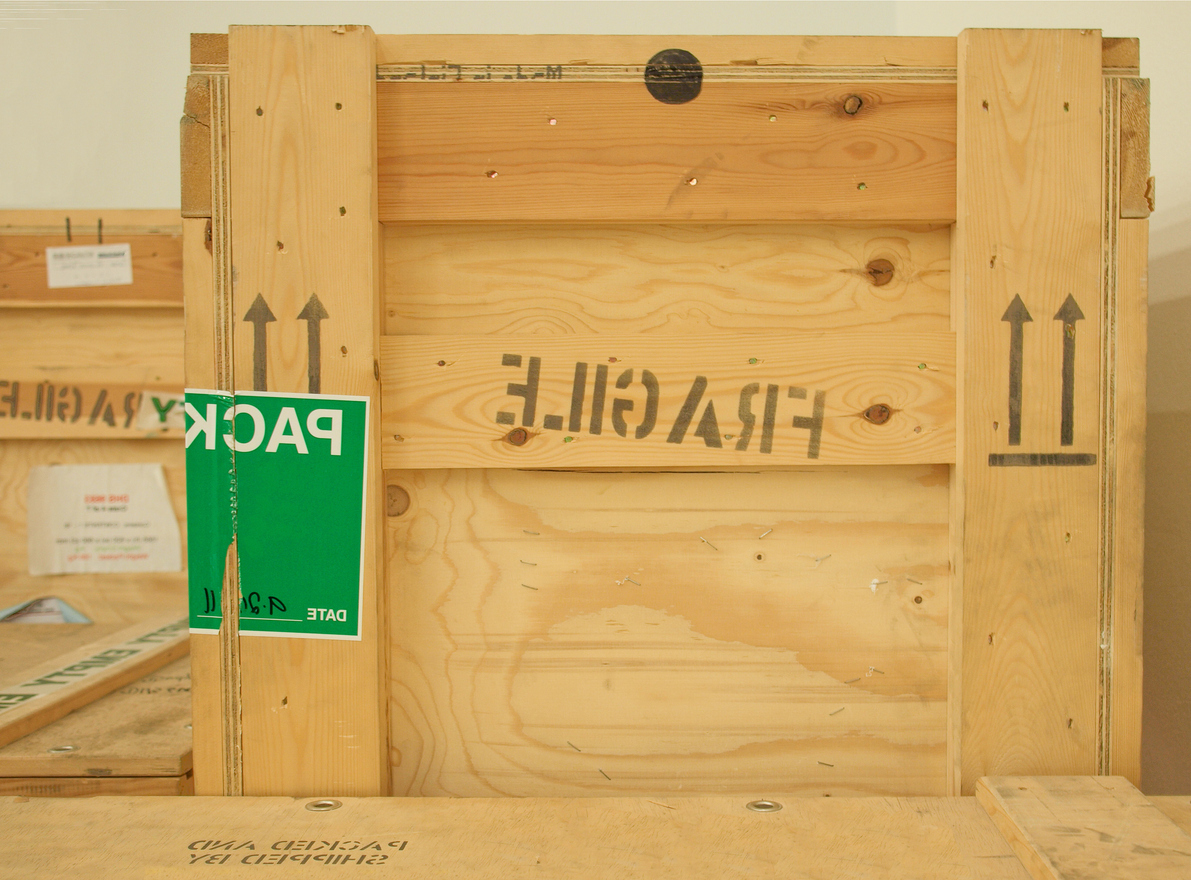
A laptop that breaks in transit gets replaced with an identical laptop. A painting that breaks in transit doesn't. Every risk below comes back to the fact that the object is unique, and its value depends on things a carrier's claims department doesn't think about.

Climate and Handling Sensitivity

Paint, canvas, wood panels, and paper all expand and contract as temperature and humidity change, and they don't do it at the same rate. When the changes come fast, the layers pull against each other. That's how paint cracks, flakes, or lifts, and how a wood panel warps.

Parcel networks aren't climate-controlled. A box can sit in a trailer in Phoenix in April, then in an unheated hub in Chicago two days later. It also rides conveyors, gets stacked under heavier freight, and changes hands at every sorting facility along the route.

None of that is unusual for a parcel. It's unusual for an oil painting. The practical consequence shows up in the form of a claim. When damage is found, the first question is whether it happened in transit or was pre-existing. A dated, photographed condition report is what answers that question. Without one, you're arguing from memory.

Custom Crating Requirements

Carriers publish packaging standards, and they enforce them when a claim comes in. Artists and dealers who have fought carrier claims report denials over packaging details as small as the thickness of the bubble wrap.

Fine art raises the bar further than most goods:

  • Glazing. Glass over a framed work is a frequent source ofsecondary damage. When it breaks, the shards cut into the work behind it. Acrylic glazing, or glass taped in a grid before packing, limits that.
  • Size. Large works need crates or travel frames, which push packages into dimensional-weight pricing and oversize surcharges. The cost pressure to under-pack a big piece is real, and it's the wrong place to save.
  • Surface contact. Anything touching a painted surface can stick to it or mark it. Wrap goes on the back and edges, not the face, unless there's a barrier layer in between.

Whatever insurance you carry, expect the claims adjuster to ask how the piece was packed. Photograph the packing, layer by layer, before you seal the crate.

Provenance-Dependent Value

A handbag's value comes mostly from the handbag. A painting's value comes partly from the painting and partly from its paper trail: who made it, who has owned it, where it's been shown, and what condition it's in.

That changes what "damage" means. A torn canvas can be restored by a skilled conservator, and the repair may be close to invisible. But a restored work can still sell for less than it would have before the tear, because buyers and appraisers price condition history. The cost of the repair and the loss in market value are two different numbers.

It also changes what documentation has to survive the trip. A certificate of authenticity or provenance file packed inside the crate goes wherever the crate goes, including missing. Ship the paperwork separately, or send copies and keep the originals.

Consignment and Gallery Shipment Risk

Galleries often ship work they don't own. The artist or a collector holds title, and the gallery sells on consignment. That raises a question most dealers can't answer off the top of their head: if a consigned piece is destroyed on the way to a buyer, who absorbs the loss?

The answer lives in your loan or consignment agreement, and in some states, in laws that govern how galleries hold an artist's work. We can't tell you what your agreement or your state's rules say. Read the risk-of-loss language before you ship. If it's unclear, that's a question for your attorney, not your carrier.

Consigned work also tends to move more than once. A piece may travel from the artist to the gallery, from the gallery to an art fair, back to the gallery, and finally to a buyer. Each of those trips is its own exposure, and each one needs coverage.

Why Traditional Fine-Arts Policies Don't Fit Dealers and E-Commerce Galleries

Traditional fine-arts insurance does its job well. A museum or university insures a collection that mostly stays put. The policy lists the works on a schedule, sets an agreed value for each, and renews every year. When a piece travels for a loan, it usually moves with a fine-art shipper, under a loan agreement that spells out coverage from pickup to return.

Look at what that structure assumes, and the mismatch with a gallery becomes clear.

It assumes a fixed list. A scheduled policy works when the list of insured works changes a few times a year. A gallery's inventory changes every time a consignment comes in or a piece sells. The schedule is often behind the inventory, and the newest consignments are often the next pieces to ship.

It assumes slow, careful underwriting. Broker-placed fine-arts policies are underwritten around the specific collection: appraisals, condition, storage, security. That's the right process for a collection worth tens of millions that rarely moves. It's the wrong pace for a dealer who closed a sale this morning and wants the piece out the door this afternoon.

It assumes art doesn't travel by parcel. This one is written right into some institutional policies. UCLA's published fine-arts coverage, for example, excludes mail shipments except registered first class or parcel post under $1,000. A policy written that way assumes art moves by fine-art shipper. A $4,000 print going out by ground service isn't what it's designed to cover.

Specialized dealer policies do exist, and some galleries carry one. These usually focus on inventory at the gallery, with transit as a secondary part of the coverage. Many carry a per-shipment transit sublimit. If you have one, check what it says about parcel carriers and per-shipment limits before assuming it covers every box you send.

The Carrier Option Doesn't Close the Distance

The other default is the carrier's own declared-value coverage. For art, that's thin. Major carriers cap the declared value they'll accept on artwork, sometimes at only $1,000 per package. Paying for a higher declared value doesn't raise that cap.

Even inside the cap, a carrier claim is a claim against the company that handled the package. The carrier sets the packaging standard, investigates the loss, and decides whether it's responsible.

So a gallery shipping a $6,000 canvas sits between two options that don't fit. The institutional policy is too slow and too rigid. The carrier's coverage stops at a fraction of the piece's value.

All-Risk Shipping Insurance for Fine Art and Luxury Goods

All-risk shipping insurance starts from the opposite direction. Instead of listing the causes of loss it covers, it covers every cause of loss except the specific exclusions written into the policy. Theft, breakage, loss in the network, a package taken from a doorstep: unless the policy excludes it, it's covered.

Three differences matter for a dealer.

Coverage attaches per shipment. There's no annual schedule to update. Each package is insured when it ships, at the value of that shipment. A consignment that arrived on Monday and sold on Wednesday is covered on Thursday, when it goes out the door.

Value comes from the transaction. Cabrella's all-risk coverage pays at invoice value, which for a sold piece is what the buyer paid. There's no separate appraisal process for each shipment. Keep the invoice with the shipment record, and the value question is answered before anything goes wrong.

Claims go to a person. Cabrella claims are handled by a real person who works the claim with you, not an automated portal. Payment typically arrives within 7–10 business days of a complete claim.

Cabrella can cover shipments up to $150,000 each. That limit doesn't cover everything. If you're shipping a single work worth $400,000, you need a fine-art shipper, a crate built for that piece, and a transit policy placed for it. We'd rather tell you that than sell you coverage that doesn't fit.

Where Claims Data Earns Its Keep

Paying a claim is the minimum. The more useful part is seeing why claims happen.

When one frame size keeps arriving with cracked corners, or damage clusters on one carrier's service to one region, the pattern shows up in the claims data. Cabrella shares that data with the you. A gallery that sees its breakage coming from one packaging method can change the packaging, and stop filing the same claim every month. For a dealer on consignment margins, fixing the cause is worth more than any single payout.

Luxury Goods Follow the Same Logic

Designer handbags, fine furniture, sculpture, and decorative objects share most of art's shipping profile: high value in one package, a buyer who expects perfect condition, and a value that depends partly on authentication. The risk profile shifts a little. Theft matters more for a recognizable handbag than for an unsigned print, and fragility matters more for glass and ceramics. But the insurance question is the same: per-shipment coverage at transaction value, from a provider who handles the claim with you.

How This Works With Cabrella's Platform

For independent galleries and luxury boutiques, Cabrella bundles shipping software and insurance into one platform. Labels, discounted carrier rates, and coverage come from the same place. There's no separate policy to set up before the first shipment, and no second system to reconcile when a claim comes in.

What to Look for in a Provider

These are the questions you want to ask before the first shipment, not after the first claim.‍

Is it valid insurance? Some "protection" products sold at checkout are not insurance and aren't regulated as insurance. Ask whether the product is issued by a licensed insurance provider. If the answer is vague, treat that as the answer.

What's the per-shipment limit? Compare it to your actual inventory, not your average sale. The piece that matters is the most valuable one you'll ship this year.

How is value determined at claim time? Invoice value, declared value, and appraised value can be three different numbers. Know which one the policy uses before you ship.

What are the packaging requirements? Get them in writing. Build your packing process around them.

Who handles the claim, and how long does it take? A named person you can call is different from a web form. A defined payment timeline is different from "as soon as possible."

What do you learn from your claims? A provider that tracks your claims can show you which packaging, carriers, or routes are costing you. A provider that only pays claims can't.

What's excluded? Read the exclusions list. On an all-risk policy, the exclusions define the coverage.

Implementation for Galleries and Luxury Retailers

Coverage only works if the process around it holds up on a busy week. Here's the setup that makes claims fast and disputes rare.

1. Sort your inventory by value

Pull the last 12 months of shipments and group them by value. Most galleries find three groups: small works and editions under $1,000, a working middle band, and a handful of major pieces. The middle band is where per-shipment all-risk coverage does its best work. The top band may need a specialist fine-art shipper and a policy placed for that piece.

2. Make condition reports routine

Before any piece is packed, photograph it front, back, edges, and corners in good light, with a date. Note existing wear. It takes ten minutes, and it's the single strongest piece of evidence in any damage claim.

3. Photograph the packing

Shoot each layer as it goes on: wrap, corner protectors, inner box, crate. This answers the packaging question before anyone asks it.

4. Set a packing standard for each format

Framed work under glass, unframed canvas, works on paper, sculpture, and luxury goods each need a different method. Write the method down, so the result doesn't depend on who happened to pack the box that day.

5. Require a signature

A unique object shouldn't be left on a doorstep. Require a signature on every art shipment, and an adult signature on anything high-value. If no one signs, the carrier holds the package or tries again instead of leaving it unattended.

6. Check your consignment terms

Before shipping consigned work, confirm who carries the risk in transit under your agreement, and make sure your coverage matches it.

7. Know your claim-day routine

If a piece arrives damaged, the buyer should keep every bit of packaging and photograph everything before moving anything. Report it right away. Carriers and insurers set deadlines for reporting damage, and the clock starts at delivery.

8. Review your claims data every quarter

Look for repeat patterns: the same frame size, the same carrier service, the same destination region. One claim is bad luck. The same claim three times is a process problem you can fix.

For gallery owners and directors: the operational details above belong to whoever runs shipping. The owner's question is simpler. How much of a year's margin sits in one crate, and what happens to the consignor relationship if that crate doesn't arrive?

FAQ

Do I need a separate fine-arts policy to ship art, or does shipping insurance cover it?

It depends on what you ship and what you already carry. Shipping insurance covers the piece while it's in transit. A fine-arts or dealer policy typically covers the work while it's in your gallery, in storage, or on display. Many galleries need coverage for both situations. What an all-risk shipping policy removes is the need to schedule every piece in advance just to ship it. Your broker or attorney can tell you how your existing policies interact.

What does a traditional fine-arts policy typically exclude?

Common exclusions include wear and tear, gradual deterioration, inherent vice (damage caused by the object's own materials breaking down), damage during restoration, war, and nuclear contamination. Some institutional policies also limit or exclude shipments sent by mail or parcel. Every policy is different, so read your own exclusions list.

How is fine art valued for shipping insurance?

It depends on the policy. Traditional fine-arts policies usually use an agreed value set in advance, often by appraisal. Carrier coverage uses the declared value, up to the carrier's cap. Cabrella's all-risk coverage pays at invoice value, so for a sold piece the value is set by the sale itself.

Can e-commerce galleries get all-risk coverage instead of an institutional fine-arts policy?

Yes, for shipments. All-risk shipping insurance is built for businesses that ship high-value goods regularly, including online galleries and luxury retailers. It covers each shipment individually, without an annual schedule. It covers the piece in transit, not in your gallery, so it may sit alongside your other coverage rather than replace it.

Look at Your Own Shipping Record

Pull last year's shipments. How many pieces went out above the carrier's cap? How many went out under a policy you'd have to update before shipping? How many claims did you file, and did the same kind of damage repeat?

If those answers aren't comfortable, talk to us. We'll look at your shipping history with you and tell you honestly where Cabrella fits and where it doesn't.


‍

Subscribe to newsletter

Stay informed about our latest about our latest technology updates, claim trends, new product updates and essential tips.

Share this post

Shipping Insurance for Fine Art & Luxury Goods: The Complete Guide

Most of what's written about insuring art in transit is written for a museum registrar. The collection rarely moves. A broker knows it piece by piece. A loan agreement spells out who pays for what, from the moment a work leaves the wall until it's hung again.

A gallery shipping three sold pieces a week doesn't look like that. Neither does an online dealer moving consigned prints, or a luxury boutique sending a designer handbag to a buyer it has never met. This guide is for them: the person who packs the box, prints the label, watches the tracking, and files the claim when something arrives cracked.

Traditional fine-arts insurance is built for museums and institutions with static collections. It comes with slow underwriting and often requires a scheduled list of insured items. A gallery or e-commerce dealer shipping consigned pieces regularly needs something built for that pace: all-risk shipping insurance that covers each piece at its full value on a per-shipment basis, without the institutional overhead.

The Unique Risks of Shipping Fine Art and Luxury Goods

A laptop that breaks in transit gets replaced with an identical laptop. A painting that breaks in transit doesn't. Every risk below comes back to the fact that the object is unique, and its value depends on things a carrier's claims department doesn't think about.

Climate and Handling Sensitivity

Paint, canvas, wood panels, and paper all expand and contract as temperature and humidity change, and they don't do it at the same rate. When the changes come fast, the layers pull against each other. That's how paint cracks, flakes, or lifts, and how a wood panel warps.

Parcel networks aren't climate-controlled. A box can sit in a trailer in Phoenix in April, then in an unheated hub in Chicago two days later. It also rides conveyors, gets stacked under heavier freight, and changes hands at every sorting facility along the route.

None of that is unusual for a parcel. It's unusual for an oil painting. The practical consequence shows up in the form of a claim. When damage is found, the first question is whether it happened in transit or was pre-existing. A dated, photographed condition report is what answers that question. Without one, you're arguing from memory.

Custom Crating Requirements

Carriers publish packaging standards, and they enforce them when a claim comes in. Artists and dealers who have fought carrier claims report denials over packaging details as small as the thickness of the bubble wrap.

Fine art raises the bar further than most goods:

  • Glazing. Glass over a framed work is a frequent source ofsecondary damage. When it breaks, the shards cut into the work behind it. Acrylic glazing, or glass taped in a grid before packing, limits that.
  • Size. Large works need crates or travel frames, which push packages into dimensional-weight pricing and oversize surcharges. The cost pressure to under-pack a big piece is real, and it's the wrong place to save.
  • Surface contact. Anything touching a painted surface can stick to it or mark it. Wrap goes on the back and edges, not the face, unless there's a barrier layer in between.

Whatever insurance you carry, expect the claims adjuster to ask how the piece was packed. Photograph the packing, layer by layer, before you seal the crate.

Provenance-Dependent Value

A handbag's value comes mostly from the handbag. A painting's value comes partly from the painting and partly from its paper trail: who made it, who has owned it, where it's been shown, and what condition it's in.

That changes what "damage" means. A torn canvas can be restored by a skilled conservator, and the repair may be close to invisible. But a restored work can still sell for less than it would have before the tear, because buyers and appraisers price condition history. The cost of the repair and the loss in market value are two different numbers.

It also changes what documentation has to survive the trip. A certificate of authenticity or provenance file packed inside the crate goes wherever the crate goes, including missing. Ship the paperwork separately, or send copies and keep the originals.

Consignment and Gallery Shipment Risk

Galleries often ship work they don't own. The artist or a collector holds title, and the gallery sells on consignment. That raises a question most dealers can't answer off the top of their head: if a consigned piece is destroyed on the way to a buyer, who absorbs the loss?

The answer lives in your loan or consignment agreement, and in some states, in laws that govern how galleries hold an artist's work. We can't tell you what your agreement or your state's rules say. Read the risk-of-loss language before you ship. If it's unclear, that's a question for your attorney, not your carrier.

Consigned work also tends to move more than once. A piece may travel from the artist to the gallery, from the gallery to an art fair, back to the gallery, and finally to a buyer. Each of those trips is its own exposure, and each one needs coverage.

Why Traditional Fine-Arts Policies Don't Fit Dealers and E-Commerce Galleries

Traditional fine-arts insurance does its job well. A museum or university insures a collection that mostly stays put. The policy lists the works on a schedule, sets an agreed value for each, and renews every year. When a piece travels for a loan, it usually moves with a fine-art shipper, under a loan agreement that spells out coverage from pickup to return.

Look at what that structure assumes, and the mismatch with a gallery becomes clear.

It assumes a fixed list. A scheduled policy works when the list of insured works changes a few times a year. A gallery's inventory changes every time a consignment comes in or a piece sells. The schedule is often behind the inventory, and the newest consignments are often the next pieces to ship.

It assumes slow, careful underwriting. Broker-placed fine-arts policies are underwritten around the specific collection: appraisals, condition, storage, security. That's the right process for a collection worth tens of millions that rarely moves. It's the wrong pace for a dealer who closed a sale this morning and wants the piece out the door this afternoon.

It assumes art doesn't travel by parcel. This one is written right into some institutional policies. UCLA's published fine-arts coverage, for example, excludes mail shipments except registered first class or parcel post under $1,000. A policy written that way assumes art moves by fine-art shipper. A $4,000 print going out by ground service isn't what it's designed to cover.

Specialized dealer policies do exist, and some galleries carry one. These usually focus on inventory at the gallery, with transit as a secondary part of the coverage. Many carry a per-shipment transit sublimit. If you have one, check what it says about parcel carriers and per-shipment limits before assuming it covers every box you send.

The Carrier Option Doesn't Close the Distance

The other default is the carrier's own declared-value coverage. For art, that's thin. Major carriers cap the declared value they'll accept on artwork, sometimes at only $1,000 per package. Paying for a higher declared value doesn't raise that cap.

Even inside the cap, a carrier claim is a claim against the company that handled the package. The carrier sets the packaging standard, investigates the loss, and decides whether it's responsible.

So a gallery shipping a $6,000 canvas sits between two options that don't fit. The institutional policy is too slow and too rigid. The carrier's coverage stops at a fraction of the piece's value.

All-Risk Shipping Insurance for Fine Art and Luxury Goods

All-risk shipping insurance starts from the opposite direction. Instead of listing the causes of loss it covers, it covers every cause of loss except the specific exclusions written into the policy. Theft, breakage, loss in the network, a package taken from a doorstep: unless the policy excludes it, it's covered.

Three differences matter for a dealer.

Coverage attaches per shipment. There's no annual schedule to update. Each package is insured when it ships, at the value of that shipment. A consignment that arrived on Monday and sold on Wednesday is covered on Thursday, when it goes out the door.

Value comes from the transaction. Cabrella's all-risk coverage pays at invoice value, which for a sold piece is what the buyer paid. There's no separate appraisal process for each shipment. Keep the invoice with the shipment record, and the value question is answered before anything goes wrong.

Claims go to a person. Cabrella claims are handled by a real person who works the claim with you, not an automated portal. Payment typically arrives within 7–10 business days of a complete claim.

Cabrella can cover shipments up to $150,000 each. That limit doesn't cover everything. If you're shipping a single work worth $400,000, you need a fine-art shipper, a crate built for that piece, and a transit policy placed for it. We'd rather tell you that than sell you coverage that doesn't fit.

Where Claims Data Earns Its Keep

Paying a claim is the minimum. The more useful part is seeing why claims happen.

When one frame size keeps arriving with cracked corners, or damage clusters on one carrier's service to one region, the pattern shows up in the claims data. Cabrella shares that data with the you. A gallery that sees its breakage coming from one packaging method can change the packaging, and stop filing the same claim every month. For a dealer on consignment margins, fixing the cause is worth more than any single payout.

Luxury Goods Follow the Same Logic

Designer handbags, fine furniture, sculpture, and decorative objects share most of art's shipping profile: high value in one package, a buyer who expects perfect condition, and a value that depends partly on authentication. The risk profile shifts a little. Theft matters more for a recognizable handbag than for an unsigned print, and fragility matters more for glass and ceramics. But the insurance question is the same: per-shipment coverage at transaction value, from a provider who handles the claim with you.

How This Works With Cabrella's Platform

For independent galleries and luxury boutiques, Cabrella bundles shipping software and insurance into one platform. Labels, discounted carrier rates, and coverage come from the same place. There's no separate policy to set up before the first shipment, and no second system to reconcile when a claim comes in.

What to Look for in a Provider

These are the questions you want to ask before the first shipment, not after the first claim.‍

Is it valid insurance? Some "protection" products sold at checkout are not insurance and aren't regulated as insurance. Ask whether the product is issued by a licensed insurance provider. If the answer is vague, treat that as the answer.

What's the per-shipment limit? Compare it to your actual inventory, not your average sale. The piece that matters is the most valuable one you'll ship this year.

How is value determined at claim time? Invoice value, declared value, and appraised value can be three different numbers. Know which one the policy uses before you ship.

What are the packaging requirements? Get them in writing. Build your packing process around them.

Who handles the claim, and how long does it take? A named person you can call is different from a web form. A defined payment timeline is different from "as soon as possible."

What do you learn from your claims? A provider that tracks your claims can show you which packaging, carriers, or routes are costing you. A provider that only pays claims can't.

What's excluded? Read the exclusions list. On an all-risk policy, the exclusions define the coverage.

Implementation for Galleries and Luxury Retailers

Coverage only works if the process around it holds up on a busy week. Here's the setup that makes claims fast and disputes rare.

1. Sort your inventory by value

Pull the last 12 months of shipments and group them by value. Most galleries find three groups: small works and editions under $1,000, a working middle band, and a handful of major pieces. The middle band is where per-shipment all-risk coverage does its best work. The top band may need a specialist fine-art shipper and a policy placed for that piece.

2. Make condition reports routine

Before any piece is packed, photograph it front, back, edges, and corners in good light, with a date. Note existing wear. It takes ten minutes, and it's the single strongest piece of evidence in any damage claim.

3. Photograph the packing

Shoot each layer as it goes on: wrap, corner protectors, inner box, crate. This answers the packaging question before anyone asks it.

4. Set a packing standard for each format

Framed work under glass, unframed canvas, works on paper, sculpture, and luxury goods each need a different method. Write the method down, so the result doesn't depend on who happened to pack the box that day.

5. Require a signature

A unique object shouldn't be left on a doorstep. Require a signature on every art shipment, and an adult signature on anything high-value. If no one signs, the carrier holds the package or tries again instead of leaving it unattended.

6. Check your consignment terms

Before shipping consigned work, confirm who carries the risk in transit under your agreement, and make sure your coverage matches it.

7. Know your claim-day routine

If a piece arrives damaged, the buyer should keep every bit of packaging and photograph everything before moving anything. Report it right away. Carriers and insurers set deadlines for reporting damage, and the clock starts at delivery.

8. Review your claims data every quarter

Look for repeat patterns: the same frame size, the same carrier service, the same destination region. One claim is bad luck. The same claim three times is a process problem you can fix.

For gallery owners and directors: the operational details above belong to whoever runs shipping. The owner's question is simpler. How much of a year's margin sits in one crate, and what happens to the consignor relationship if that crate doesn't arrive?

FAQ

Do I need a separate fine-arts policy to ship art, or does shipping insurance cover it?

It depends on what you ship and what you already carry. Shipping insurance covers the piece while it's in transit. A fine-arts or dealer policy typically covers the work while it's in your gallery, in storage, or on display. Many galleries need coverage for both situations. What an all-risk shipping policy removes is the need to schedule every piece in advance just to ship it. Your broker or attorney can tell you how your existing policies interact.

What does a traditional fine-arts policy typically exclude?

Common exclusions include wear and tear, gradual deterioration, inherent vice (damage caused by the object's own materials breaking down), damage during restoration, war, and nuclear contamination. Some institutional policies also limit or exclude shipments sent by mail or parcel. Every policy is different, so read your own exclusions list.

How is fine art valued for shipping insurance?

It depends on the policy. Traditional fine-arts policies usually use an agreed value set in advance, often by appraisal. Carrier coverage uses the declared value, up to the carrier's cap. Cabrella's all-risk coverage pays at invoice value, so for a sold piece the value is set by the sale itself.

Can e-commerce galleries get all-risk coverage instead of an institutional fine-arts policy?

Yes, for shipments. All-risk shipping insurance is built for businesses that ship high-value goods regularly, including online galleries and luxury retailers. It covers each shipment individually, without an annual schedule. It covers the piece in transit, not in your gallery, so it may sit alongside your other coverage rather than replace it.

Look at Your Own Shipping Record

Pull last year's shipments. How many pieces went out above the carrier's cap? How many went out under a policy you'd have to update before shipping? How many claims did you file, and did the same kind of damage repeat?

If those answers aren't comfortable, talk to us. We'll look at your shipping history with you and tell you honestly where Cabrella fits and where it doesn't.

‍

Subscribe for Email Updates

icon