Retail Return Shipping Risk: What Comes Back Isn't Always What Left
Returns management has become a genuine discipline. Platforms built specifically for the return experience now handle routing, exchange logic, fraud flagging, customer communication, and reverse logistics optimization. The operational layer of returns is more sophisticated than it's ever been.
What those platforms don't do natively is manage the physical risk on the return leg itself. Specifically: what happens when a high-value item is in transit coming back, and what arrives isn't what left.
For most e-commerce shippers, that gap is manageable. For high-value shippers — jewelry, watches, collectibles, luxury goods — it's a different problem entirely.
Return shipments carry different risks, and often less coverage
Outbound, the shipper controls almost everything. Packaging selection, carrier choice, declared value, service level, insurance. The item leaves the facility in the conditions the shipper designed.
Return shipments are often uninsured or underinsured relative to outbound shipments — especially when the return label is customer-initiated or not configured with additional coverage.
That asymmetry is a manageable cost of business at low average order values. A $40 item that comes back damaged or doesn't come back at all is a rounding error. The math looks different when the item is a $3,500 watch or a $6,000 piece of jewelry. At that price point, one incident is a material loss event.
Returns fraud is a severity problem at high AOV
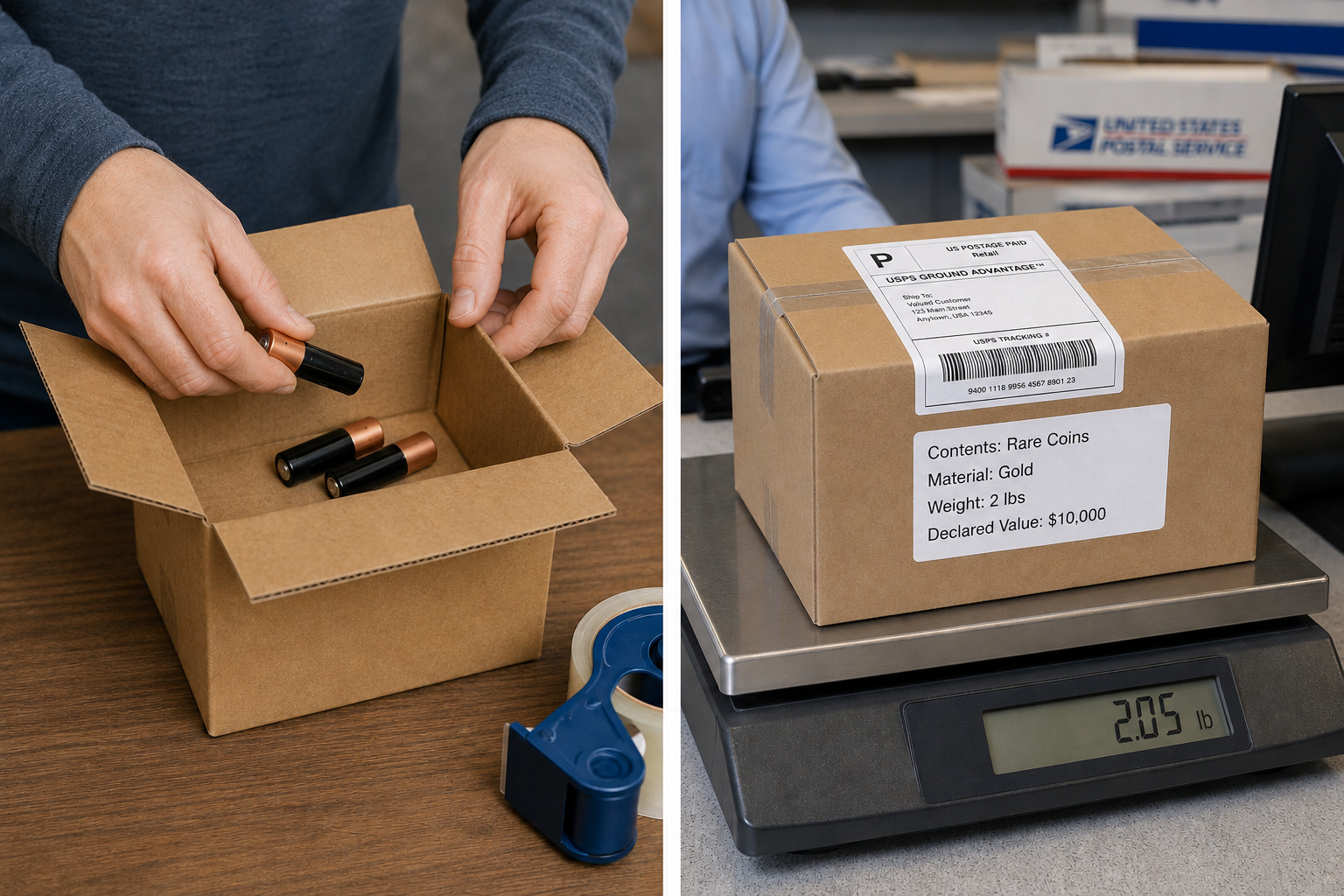
Ecommerce fraud is on the rise throughout the purchase journey. For example, a recent report found that 83.2% of ecommerce merchants said they've seen an increase in chargeback fraud. According to Appriss Retail's 2024 Consumer Returns in the Retail Industry report, conducted in collaboration with Deloitte, fraudulent returns and claims cost retailers $103 billion in 2024, with 15.14% of all returns deemed fraudulent. That number reflects the full retail landscape, across all categories and price points.
The fraud rate doesn't necessarily run higher at high AOV, but the severity does.
A specific scheme that surfaces repeatedly in high-value categories is a substitution: the customer ships back something worthless and claims the valuable item was lost in transit, damaged by the carrier, or never received. At low AOV, the economics don't support the effort. At high AOV, a single successful substitution can represent a four- or five-figure loss on a single transaction.
Cabrella has documented this pattern outside the returns context — precious metals dealers have faced exactly this scheme, with fraudsters shipping batteries or canned goods instead of coins or bullion, then filing claims for the metals. The inbound substitution fraud and the return substitution fraud are structurally the same. The item of value is the bait. The return or inbound label is the mechanism. The claim is the payday.
The difference between catching that fraud and absorbing it comes down to two things: the investigation capability and the coverage structure behind it.
What the returns platform does and doesn't do
Returns operations platforms have built real fraud detection capability. Behavioral flagging, policy abuse identification, return history analysis. That tooling is genuinely useful and has meaningfully reduced opportunistic fraud at scale.
What it doesn't necessarily provide is coverage for the physical transit risk on the return shipment. Behavioral fraud detection catches patterns before the return is authorized. It doesn't resolve what happens when the package is already in transit and what comes back isn't what left.
That's a coverage question, not an operations question
Standard carrier liability on a return shipment is the same as on an outbound one: limited, formula-based, and disconnected from invoice value. A $4,000 piece of jewelry moving on a return label carries no more carrier liability than a $40 item in the same box dimensions. If there's no third-party coverage on the return leg, the shipper absorbs whatever the carrier won't pay, and unfortunately, that’s usually most of it.
The gap in the affiliate offering
If you manage returns for high-value brands, the coverage question eventually lands on your desk. Not because you caused the problem, but because your name is on the experience.
A client whose $5,000 return arrives as an empty box, or doesn't arrive at all, is going to want to know what happens next. The answer most returns platforms can give is operational: here's what the tracking shows, here's when it was handed off, here's what the carrier says. What they can't give is a coverage answer: here's the policy that covers this shipment, here's what it pays, here's the adjuster handling it.
That coverage gap is the same one that makes claims experiences go badly in every other context. The platform manages the process. The loss sits with whoever is uninsured. And the client's frustration lands on the relationship they have, which is with the platform, not with the carrier.
Adding credible insurance coverage to the return leg changes that dynamic. It doesn't eliminate fraud, but it means that when substitution fraud or transit loss happens on a high-value return, there's a coverage structure behind it that matches the actual value of what was shipped. Not a carrier formula or a declared value cap that nobody set correctly. A policy written for shippers who understand that a single loss matters.
For a returns platform managing high-value brand relationships, that's the difference between being the vendor that handles the process and being the partner that handles the problem.
What that coverage looks like in practice
Cabrella's API integration connects to existing order management and label generation platforms. That means returns platforms don't need to rebuild their infrastructure to add coverage. The insurance layer sits alongside the operational layer that's already there.
Coverage runs up to $150,000 per shipment, all-risk, paid at invoice value. Claims are handled by Cabrella's own people with direct accountability from first notice through resolution. When a high-value return goes sideways, there's someone to call who's already working the problem.
For brands shipping items where a single return fraud incident is a real financial event, that's not a bolt-on. It's the part of the returns program that makes everything else defensible.
________________________________________
Talk to a Cabrella specialist about adding return coverage to your platform offering.


Subscribe for Email Updates